
The European (Brittas Bay)
- Neil White
- Feb 1
- 4 min read

Never have so many questions swirled around my head after playing a top 100 golf course as they did after our game at The European Club in Brittas Bay.
I had played here before, when the Pat Ruddy design was ranked among the world’s best, with some highly acclaimed holes.
This was Ruddy’s baby: a fearsome layout with railway sleepers propping up every bunker and hellish rough, which made losing balls a certainty. Oh, and there were two extra holes in case 18 wasn't enough.

Last summer, he sold the club, which was also his home, to two golf fanatics who had made their money from a family car dealership.
Now, Raymond and Nicky Conlon have set about altering the impression of The European from a curiosity to a must-visit venue for international visitors.
The course was due to close for 18 months two weeks after our game, but a widespread clearance of trees and gorse had already begun.

In addition, the lake on the seventh, which was a key factor in its stroke index rating, has been filled in, and the gorse, which was a significant feature of the acclaimed par-three 14th, has been removed.
So, what’s next? Will the course look anything like the Ruddy set-up? What will its condition be? Which types of players will be most welcome?
We played it on a glorious winter day with long shadows cast by the low sun. The views out to the Irish Sea were fabulous, especially from the course’s highest vantage points.
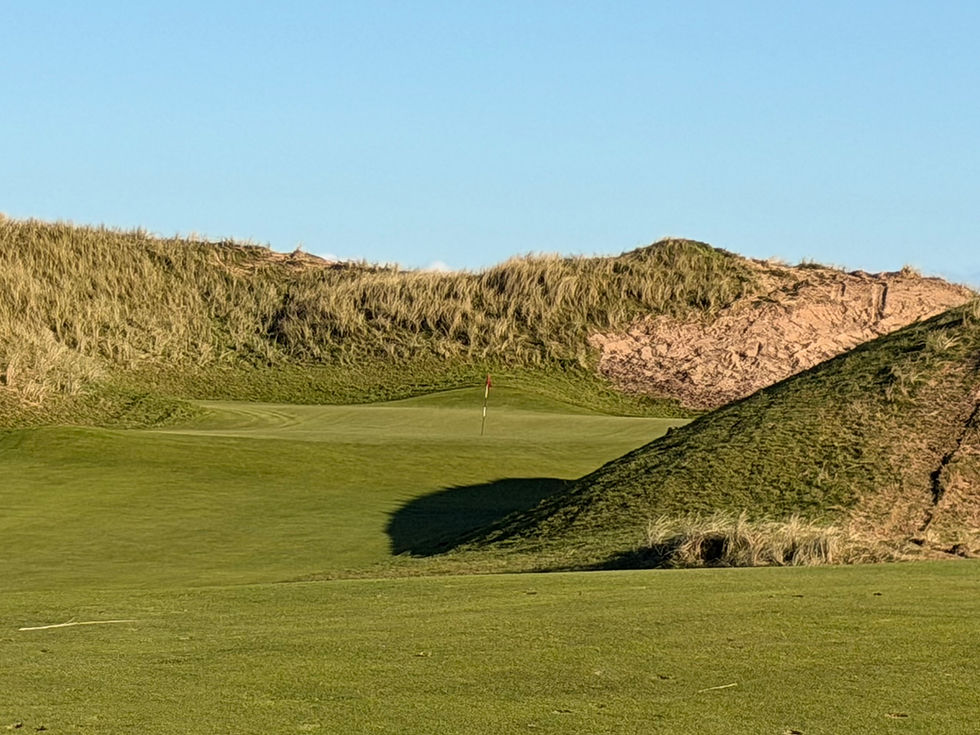
Podcast Partner and I were allowed to play with a couple of high-quality players competing in a TaylorMade tournament.
They were playing off whites, but we thought better of it and opted for the yellow tees.
But that wasn’t the key to success or failure – joy or ignominy was down to the greens, which were unusually soft for links but also incredibly quick with bamboozling borrows.

The opener sets the tone – its bending, undulating fairway leads into an elevated back-to-front green defended by one of those evil deep bunkers.
We had watched a YouTuber score double figures on the par-three second, and I felt a shiver of horror when my ball fell into the same spot as his tee shot, in tufty grass above a deep bunker.
It had held up precariously above the trap, but I managed to get my lob wedge at it, and the ball rested six feet from the cup. Obviously, I missed the putt.

We were left with the impression that the Conlans’ course will be more forgiving than Ruddy’s, so it wouldn’t be surprising if holes such as the third have fewer than the current eight sand traps.
Bunkers threaten off the tee, on the second shot, and on the approach to this par-five, ending at another swirling green.
“Do you realise you just played off the whites?” said a smirking PP as I sent a drive up the left-hand side of the fiendish par-four fourth. His laughter subsided when he topped the ball from the yellow tee, barely reaching the red, and then hacked it out about six feet.
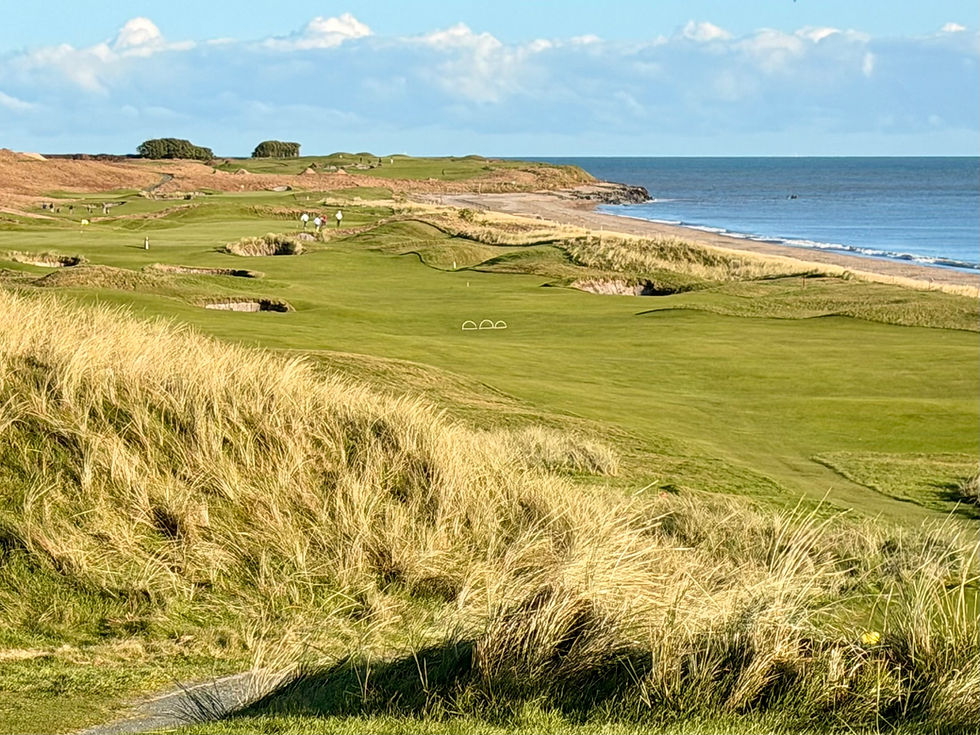
The eighth was one of my first nine favourites and left me wondering how the new owners could improve it.
This is a par-four between towering dunes and a fairway that drops into a chasm before rising to a green that has a dramatic fall-off to the right.
The outward nine has plenty of interest but is ultimately overshadowed after the turn by some classic shoreline holes.

The Irish Sea is the backdrop for the 11th, a lovely par four with bunkers on either side of a fairway that arcs around a dune to a raised green above a deep trap. Again, I found the bunker's furry top, but thankfully made a good enough connection to secure par.
The 12th has stupendous views from an elevated tee down a fairway that runs parallel to the coast and between fiendishly placed bunkers. But Ruddy’s quirk is the longest green in the world at 128 yards! Will the Conlans keep it? Another question to be answered.

They will also face a quandary over the trap that sits in the middle of the putting surface on the par-five 13th – another shoreline hole that demands straight hitting to avoid disaster en route to a green that falls in different directions.
PP found out how deep the sand can be on the 14th, the par-three. I have never witnessed such a deep fried egg, and he moved the ball a few inches before striking it against a railway sleeper that deflected it into the adjacent trap.
“Danger. Deep water,” warned the sign on the side of the 15th green. Our playing partner took no heed as he attempted to play a ball that nestled at the top of the beachside hill.
Meanwhile, I was on a good run by now and just missed a birdie putt on the par-four. I was outdone by the second of the competition entrants, who nailed an eight-footer to prize open the drinks cabinet.
The best moment of the day was reserved for the 18th, which remains a daunting par-four despite the removal of trees on both sides of the fairway.

Having avoided the two bunkers down the right, our playing partner, who had risked his well-being on the 15th, lashed a fairway wood over the snaking stream in front of the green. He was left with a curling downhill putt for birdie and sank it to the delight of all.
Our round had been great fun, and it felt as if we were waving goodbye to the Ruddy version of The European.
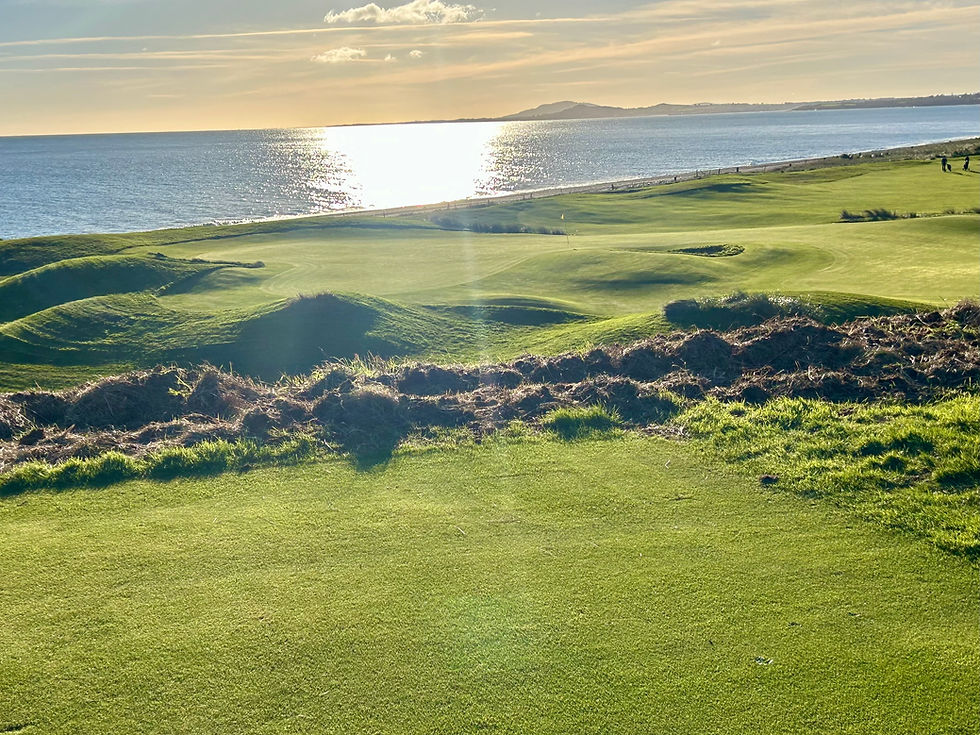
Its new management says the redeveloped course will be world-class, as will its clubhouse (the currently homely one is being replaced).
The full vision will be revealed during 2026, and I can’t wait to see the extended plans and their realisation in 2027.



Comments