
Appleby

‘The nuttiest of nutty holes in the world... No one would build this hole now. They'd build the Road Hole a hundred times before they built this."
So says Mike Clayton, who enjoyed an impressive career as a player before becoming one of the most acclaimed course designers and restorers in the world.
Clayton was speaking about the par-three 15th at Appleby Golf Club, which has recently been elevated to England’s top 100.
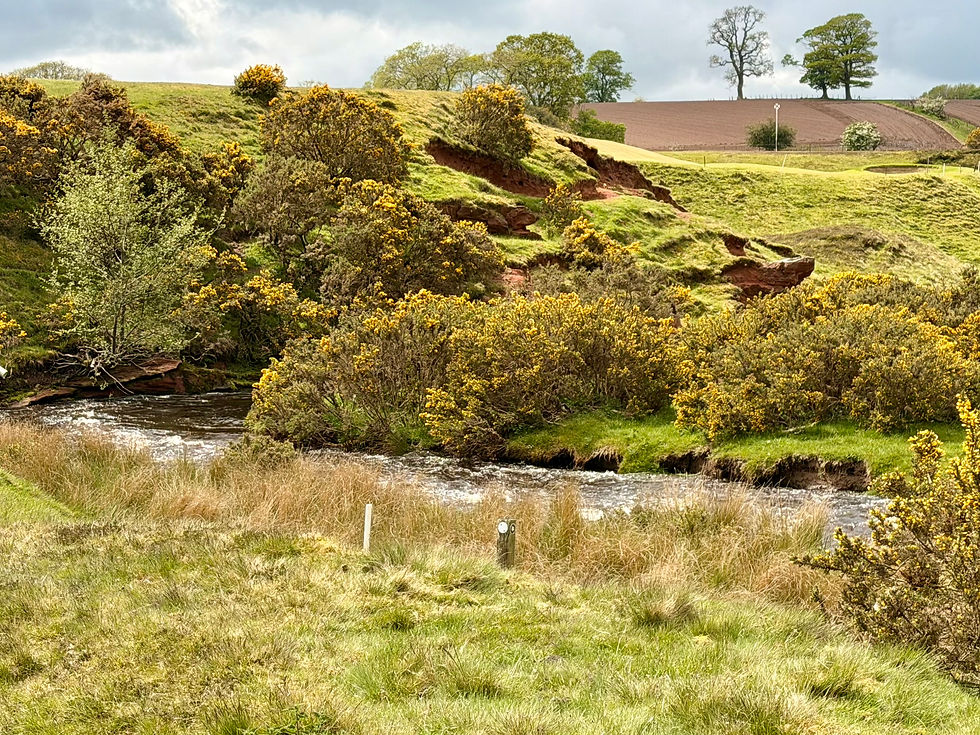
And he isn’t wrong. It is the only par-three that I have ever felt compelled to walk the entire distance before playing, just to try and understand its complexities.
It is just about possible to see the top of the flag from a tee positioned next to a river that cuts around the right of the hole.
From there, the ball must fly over a rocky inlet, a grassy chasm, and a hillock before finding a small, horizontal green backed by a steep bank.

My words don’t do it justice, and neither did my shot, which, despite that prior inspection, found the deep dip.
Meanwhile, I was glad I had called up Mrs W to show her what lay ahead, because she placed her ball neatly onto the putting surface.
However, the story doesn’t end there; the green possesses a treacherous slope that could easily lead to a three-putt.

Such is the head-spinning nature of the 15th, I believe it is the most I have written about any single hole during my six-year Top 100 quest.
Appleby sits just off the A66 in Cumbria, and we had driven past it many times on the road to Silloth.
Thus, I was delighted to finally have an excuse to call in after a golf trip up north.
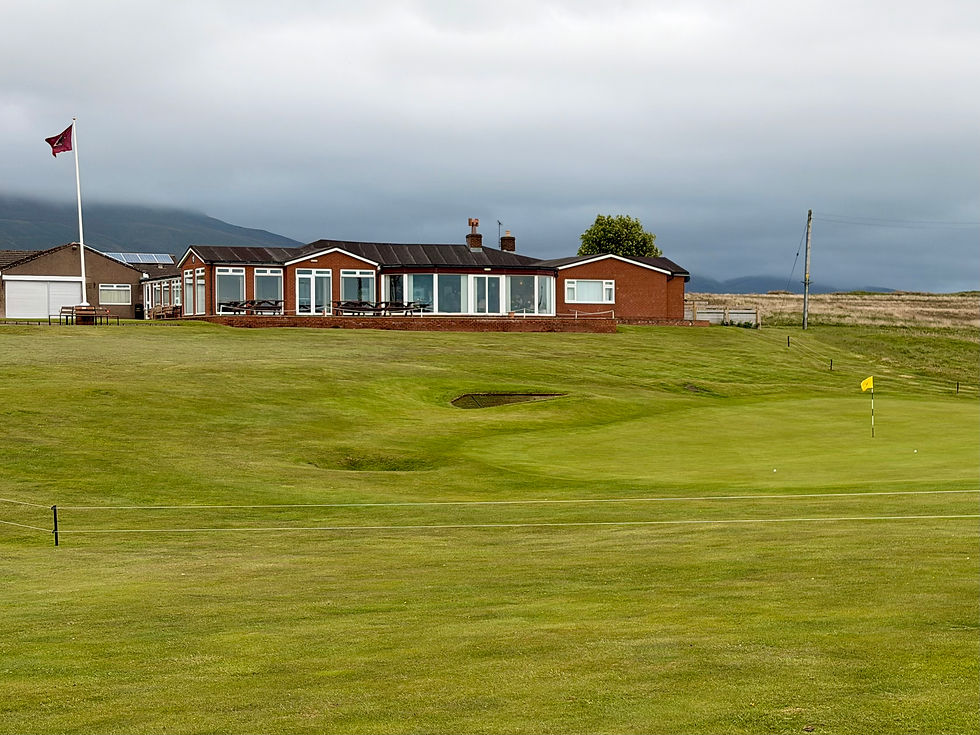
A visit here is akin to stepping back in time on many levels.
The course has been described as "Gleneagles in the raw," and those who enjoy the unspoilt delights of Brora, Royal North Devon, Sutton Coldfield, Cleeve Hill, and Kington will certainly get their kicks here.
Indeed, we spoke to a Belgian couple who were fans of Askernish and the Isle of Harris, and they were eulogising about Appleby.
The clubhouse has echoes of Kington, too, and we can vouch that the food is of a similarly high quality.

The only staff member on duty when we arrived was the barman, who doubled up as the starter, giving us a thorough run-down of the course as well as suggesting the best time to tee off.
Unfortunately, the weather was mizzly and windy. When the sun shines, the views across the moors and out to the Lake District must be remarkable.
Appleby’s par of 68 should put nobody off. Willie Fernie’s 1903 design was lauded at its opening and remains a testing layout. It features no par-fives, but rather a collection of par-fours and threes that demand both strength and precision.

It sits on common land, so the resident sheep act as natural greenkeepers on the fairways, kept away from the greens by electric wiring.
After a gentle opener, the second presents the first blind drive, demanding a straight line to avoid the flanking heather and bracken. Its approach sets a running theme for the day – be precise or face a severe run-off that will leave your ball in a tough spot.

The first true jaw-dropper is the par-three fourth. It falls so steeply downhill that balancing the gradient against the wind feels like it requires Isaac Newton’s understanding of gravity.
But Appleby is so idiosyncratic that what goes down must come up; from the same level as the fourth green, you step onto a mind-blowing fifth tee at the bottom of a ravine.
The hill of gorse has been cleared in front of the player, revealing a flock of grazing sheep and a distant marker post that appears barely taller than a pin. I was mighty relieved to clear the hazard, hit the back of the green in two, and claim a rare par.

It is followed by another demanding hole from an elevated tee, where you must hit the fairway to avoid being blocked out by trees on the right.
The approach to a green framed by a barrier wall and farmhouse needs to be long and true to avoid greenside bunker trouble.

The seventh is another of Appleby’s mind-benders.
From the tee, the natural ripples of the land completely hide the fairway. A centre-left drive will leave you in good shape for a fearsome ascent to a green perched precariously above a very steep bank.

The dogleg ninth positions itself as the toughest hole of the opening half, requiring a shaped drive around a corner of heavy bracken.
Even if that is successfully negotiated, the long approach still carries plenty of peril, with thick rough flanking the fairway and cunningly placed hazards protecting the green.
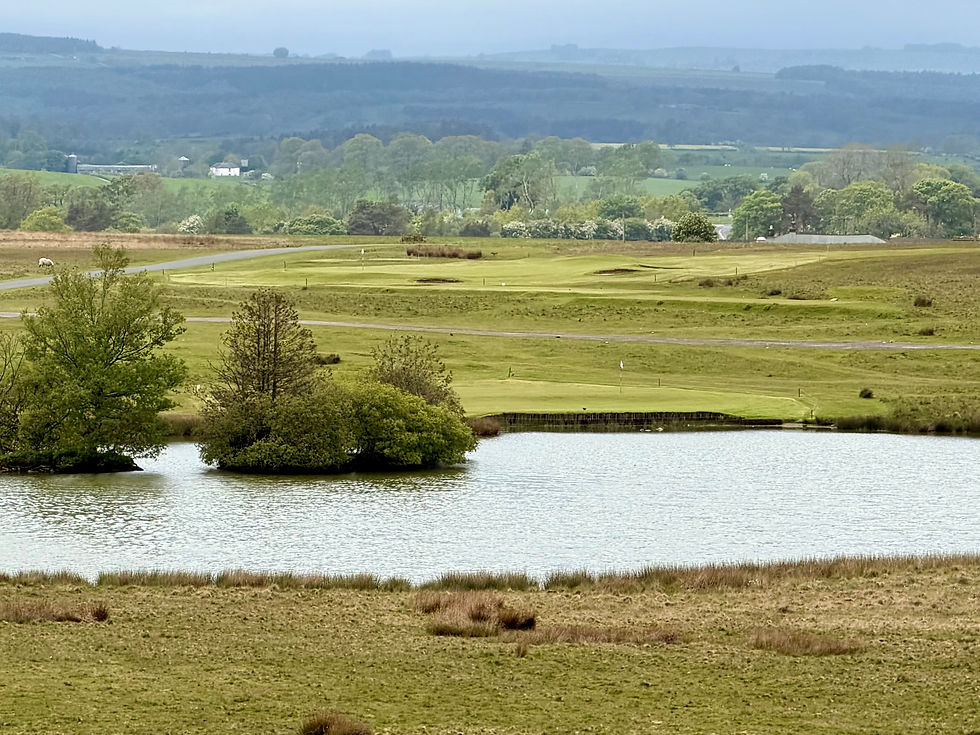
Aside from the incredible 15th, the other holes on the run-in offer plenty of drama.
Take the long 14th, which winds downhill before an approach to a two-tier green cut into the natural terrain right beside the water that becomes so integral to the next hole.

The 15th may be the iconic short hole, but the 17th is an equally challenging par-three, requiring a precise tee shot toward a perched green protected by hazards and a hillock, with out-of-bounds looming dangerously.
The putting surface falls so sharply from back to front that any over-hit putt risks trickling right off the surface.

On the home hole, a long drive needs to draw to allow the best approach into a tilted green.
It can easily deliver a final punch in the ribs to players who mistakenly thought Appleby would be a pushover, only to realize late in the day that it simply isn’t.

My only regret was that we didn’t catch the wonderful, clear views for which the moor is famous.
That said, it gives me a perfect reason to return, and I will be fascinated to see the changes that Clayton, DeVries & Pont bring to this fine moorland course.


Comments