
Wallasey (revised)

It was a time for reflection and quiet thanks to the man who saved the golf game of mid-handicappers like me.
After a nine on the first hole had wrecked his medal round, Wallasey club member Dr Frank Stableford devised a points-based system to keep golfers competitive and engaged even after a disaster.
The world’s first official Stableford competition was contested here on May 16, 1932. It is a system so good that it is still used to this day, and one we mostly rely on during our top 100 travels.

Ironically, during our visit to these tremendous links, I was playing in a society matchplay.
Nevertheless, it was a privilege to follow in the doctor’s footsteps, as well as those of Bobby Jones, who qualified at Wallasey en route to winning the Open at Hoylake as part of his historic Grand Slam in 1930.
While Wallasey rightly bathes in its history, it also looks clearly to the future. For the past few years, its course has undergone considerable change, earning the club its well-deserved place in Great Britain and Ireland’s top 100.

Now it is looking towards recognition in the world rankings, and having played the course, I wouldn’t be surprised if those ambitions are met.
We were fortunate to have a long chat with acclaimed course manager John McLoughlin and club manager Gareth Irwin ahead of our round, and their enthusiasm for the project is tremendous.
Then, after some useful practice putts, it was out with a jovial member for our game.

I thought I had faded my opening drive too far, but I was told it was the perfect spot on a par-four where a bunker lurks on the left.
The green is reachable with the next shot if traps on either side are avoided, leaving the potential for a birdie. We settled for pars and a good start.
The devil is in the details at Wallasey. The greens and fairway turf are supremely consistent throughout, but the extras are what truly set the conditioning apart.

Twice a week, the fabulous grass walkways are cut and tidied. Every morning, broken tees and litter are removed from the course. The bar is set incredibly high and, as a result, the links are pristine.
There is a plaque in memory of Stableford on the second, which is a long, bending par-four to a raised green.
A bogey five—and two points—would be more than satisfactory.

We were playing off the yellow tees but took a walk back to the championship tees to look down on the magnificent fourth hole.
Lucky enough to be playing on a gorgeous day, we could see right across Liverpool Bay to the Lancashire coastline, the distant peaks of North Wales, and the sweeping edge of the Wirral peninsula.
This par-five runs alongside the coast and parallel to the 17th fairway, where stray drives often come to rest.

It was a calm day, so this stroke index one didn’t hold too much peril, allowing me to help myself to a third par out of four holes.
The first par-three faces towards the Irish Sea, and we were thankful that the wind wasn’t gusting. Its green is tucked between a grassy mound on the left and a slope on the right with a menacing bunker.
This was surely my day; I missed the sand trap, read the putt decently, and popped it in for another par.
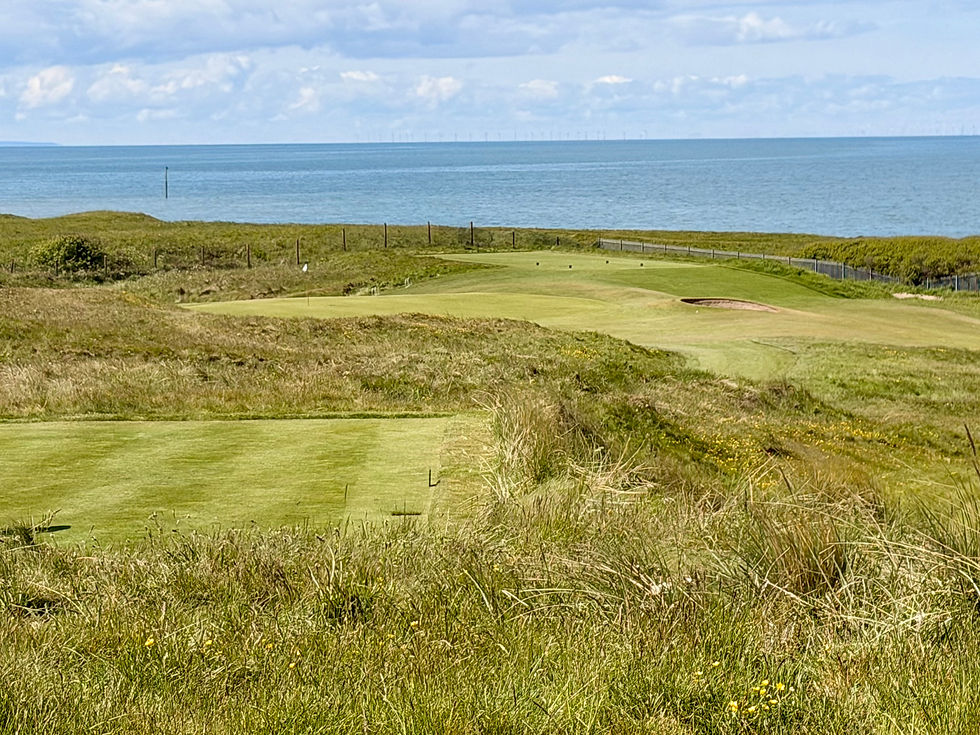
The green speeds are consistent but the surfaces are often undulating. My opponent had no problem with the sixth, however.
He guided his drive away from the bunkers on the short par-four, played over the gully at the front of the target, and knocked it in for a birdie.

The ninth is a fabulous par-three, made all the more memorable by the plaque in memory of Bobby Jones.
Its green is protected by two deep bunkers, and the rolling putting surface features alarming roll-offs.
My tee shot was a touch too aggressive and my putt back up the slope was disappointingly short.

I was thrilled, therefore, to knock it into the hole from distance to save par.
Wallasey had inspired one of the best front nines of my life, and my game was never likely to maintain such heights.
But the golf course certainly did!

The tenth is a glorious, short, bending par-four to a target perched high on a plateau.
Playing steeply uphill and into the wind, I went two clubs up and watched my well-struck approach fly the green, ending up down the hill behind the target.
The 12th is a wonderful short par-three with a target surrounded by bunkers. Seldom have I been so relieved to find the green.

I was bamboozled on the 15th tee because the fairway looks like a mere sliver, running around to the right of three big bunkers.
Consequently, the rough to the left becomes a magnet. However, I recovered well enough to fire at the green, only to watch my approach trickle down a steep slope to the left.
The comedy came as I attempted my next putt, which rolled up towards the hole, caught a bank, and then fell right back down again. These situations are common at Wallasey and add to the fun… and the frustration.
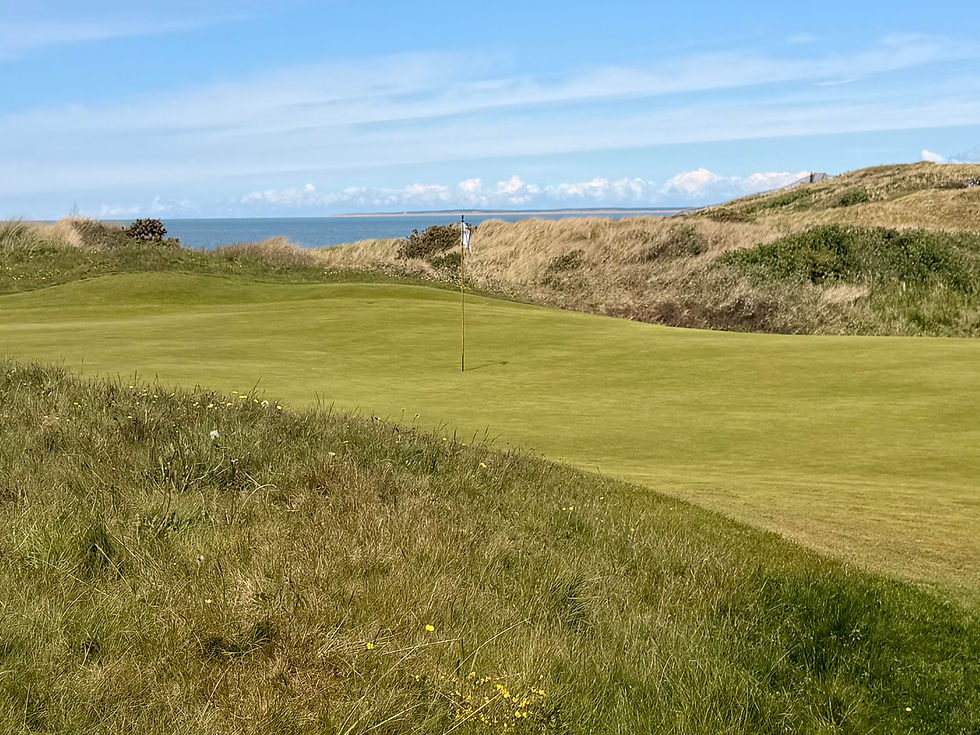
The run-in is top-class, beginning on the par-three 16th with a story from my opponent of how he had once aced it without ever seeing the ball drop.
I was perplexed by the club selection for a 200-yarder that is cut inside a high dune on its right. He took advantage and levelled our match.
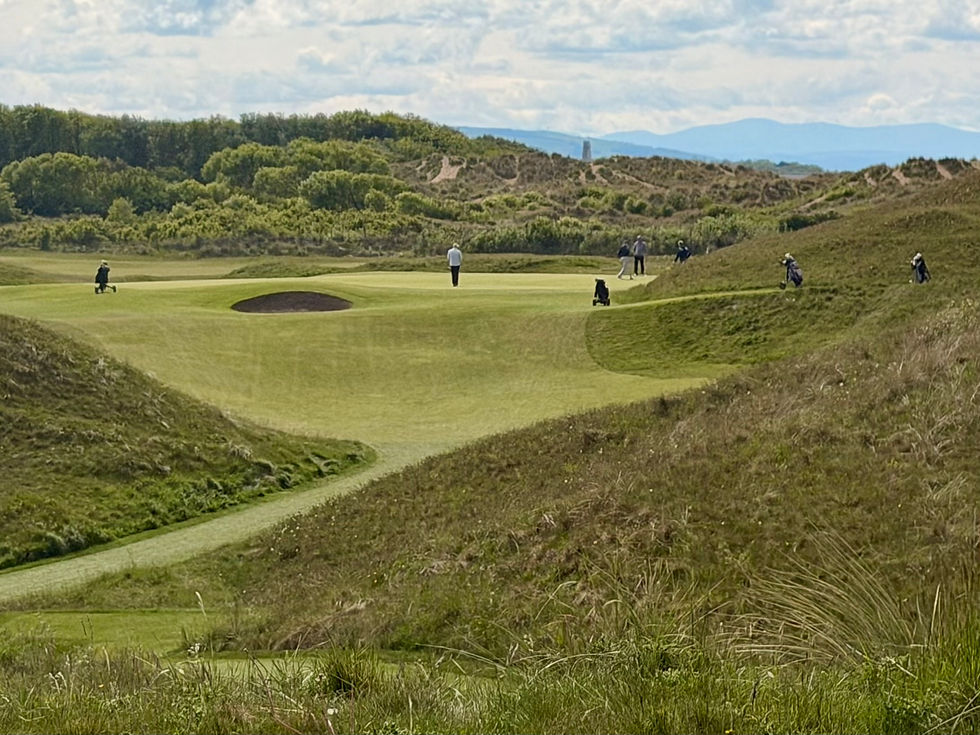
However, my luck turned on the wonderful 17th—a par-four that begins parallel to the sea before turning inside the dunes to possibly the flattest green on the course.
We were both left with lengthy par putts. I rolled mine in and his lipped out.

The crescendo is left for a final par-four that is cut between thick rough on either side before a clip over a hill to a green framed by the backdrop of the clubhouse and St Nicholas Church.
Thankfully, we completed our game in style with pars, and I celebrated an unlikely win.

Regardless of our result, this had been a superb day in great company at a club and course that have made incredible advancements in recent years.
I can’t wait to follow their future developments.


Comments